Project model For Business
Our Experts will manage your business goal
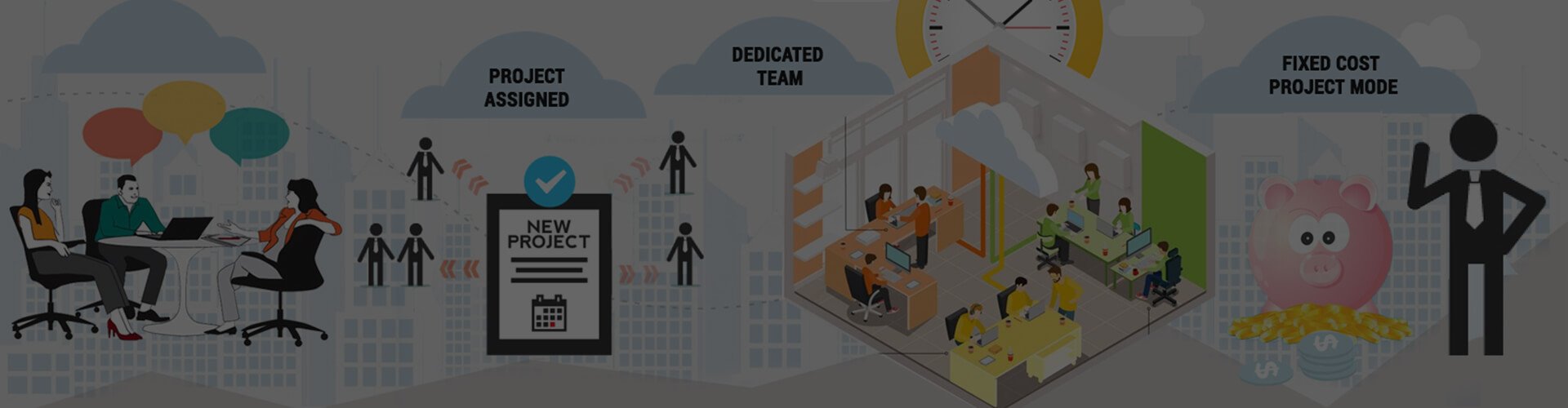
Why should you work based on fixed price model?
Many consider the project model to be the most traditional software development method. The project model is a rigid linear model that consists of sequential phases (requirements, design, implementation, verification, maintenance) focusing on distinct goals. Each phase must be 100% complete before the next phase can start. There’s usually no process for going back to modify the project or direction, but we provide 1 time changes in completed module. Easy to manage due to the rigidity of the model. Each phase has specific deliverables and a review process. Works well for smaller projects where requirements are very well understood. Process and results are well documented. Major requirements must be defined; however, some functionalities or requested enhancements may evolve with time. In this module you can plan parallel development. This model is less costly to change the scope/requirements. Communication is mainly through mails & via hierarchical layers. Also defined communication points.
The advantages of a fixed price model
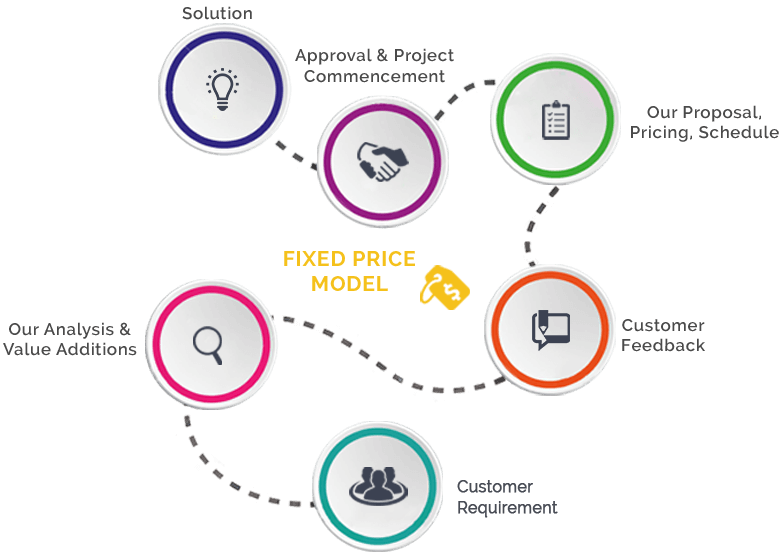
A fixed cost pricing model is a model that guarantees a fixed budget for the project, regardless of the time and expense. The main advantage of a fixed price model is that it allows the client to plan and set an exact budget. Fixed cost pricing model approach is best suitable for projects with a strictly defined scope and requirements that won’t change. Any changes will require additional estimation and additional contract. So, one of the main requirements of using the fixed cost pricing model is to precisely define the scope and technical requirements up front.
- Precise and transparent requirements, and well-planned milestones
- Minimum customer supervision is required
- The price fixed project will be completed within established budget and terms
- Low risk for clients, that’s why a fixed price model works best for a small trial projects
- A fixed budget acts as an essential tool to measure the success of your small business both in short-term and long-term periods.
- A greater ability to make continuous improvements and anticipate problems.
- Review it regularly by monitoring performance, reviewing progress and achieving objectives.